A good brief is the cheapest and most reliable way to ensure your commercial is the best it can be. What costs an hour or so can save weeks. On the other hand, a weak brief leads to vague quotes, slow timelines and a film that doesn’t deliver what you want, mainly because the production company was guessing.
But what should you include? What do production companies need to do their best work?
Let’s find out.
Why a Video Production Brief is Vital For Success
We use a brief to do three things:
- Understand what you want
- Scope the project
- Give you a price
A clear brief lets us do that quickly and accurately. A vague one leads to more questions or reliance on assumptions. Questions take time, and assumptions get padded with caution, which shows up in the quote.
The brief is also the document everyone keeps coming back to. When a question arises in week four, the brief settles it. The hour you spend now can save time in every meeting after.
How to Brief a Video Production Company
You don’t need a long document but you do need a clear one. And these are the points that matter:
- What the film is for: Are you launching a product, building the brand, running a paid campaign, or filling a content gap? The purpose shapes every decision that follows.
- Where it will run: Broadcast television, YouTube, paid social, your website, an event screen? This tells the production company whether you need a broadcast commercial, an online one, or a set of campaign films from one shoot. It also directly impacts the timeline and the budget.
- Who it is for. Your audience. Be specific. "Marketing managers at mid-size tech firms" is more useful than "professionals." The film talks to them, so the production company needs to know who they are.
- The single message. If a viewer remembers one thing, what is it? A commercial that tries to say five things says nothing. Pick the one that matters and let the film carry it.
- Tone and references. Outline a few commercials you like, and why. Note your brand's tone of voice and share any visual rules or guidelines. References are shorthand that gets everyone seeing the same thing, telling us way more than a page of adjectives can.
- Deliverables. What do you need at the end, specifically? A single hero film, or a hero plus cutdowns, vertical versions, and social edits? Decide now, because it is far cheaper to plan for every format up front than to recreate them later.
- Timeline. Your launch date and any fixed milestones. Make it clear early on if there are any hard deadlines. Production companies plan backwards from your deadline, so they need to know it.
- Budget range. The part marketing teams most often leave out, and the part that helps most.
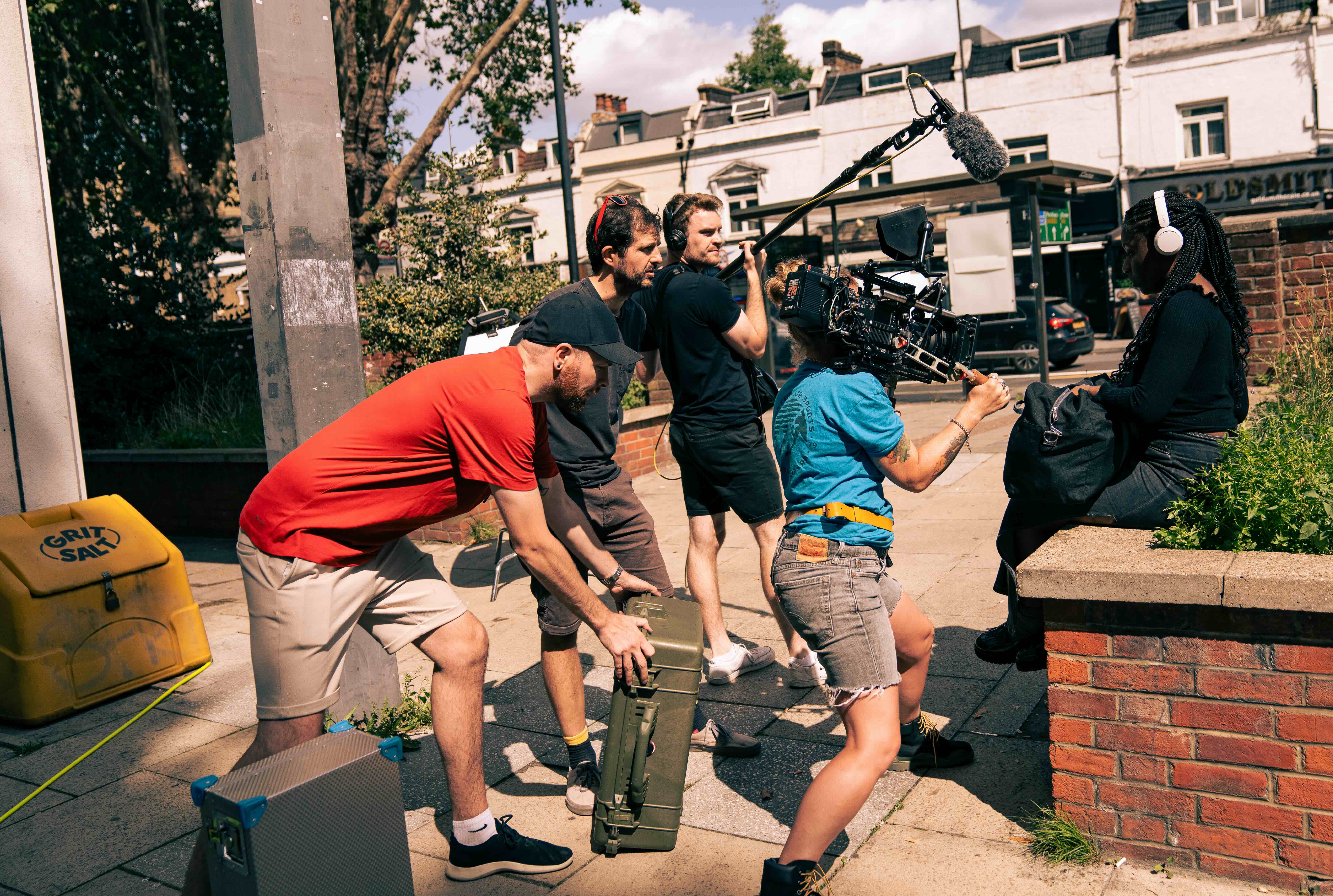
Yes, Share Your Budget
There is a habit of hiding the budget in case the production company spends it all, but it almost always backfires.
A budget range is not a number to be maximised. It is the single most useful piece of information you can share, because it tells us what kind of film to design. With a range, we shape the most ambitious commercial that fits it. Without one, we either guess high and price ourselves out, or guess low and propose something smaller than you wanted.
You do not need an exact figure. A range is enough. "Somewhere between £40,000 and £60,000" lets a good partner come back with the right idea at the right scale, rather than three rounds of revised quotes while you both circle the real number.
What to Leave Out of a Video Production Brief
A good production brief needs to straddle the line between enough detail and too much. A bloated brief can be as unhelpful as a thin one, forcing the production company to try and work out what you want.
So here’s what to leave out.
You do not need a finished creative idea. Any good production company offers creative as part of the work, so if you have a clear purpose and message, the idea can come from the collaboration. If you do have a concept, share it, but do not feel you have to arrive with the film already designed.
You do not need technical specifications, frame rates, codecs, or delivery formats. That’s our job. Tell us where the film runs and we’ll handle the rest.
You do not need to write it like an agency brief. Plain and clear beats polished and vague. A short email that covers purpose, audience, message, deliverables, timeline, and budget is a strong brief.
One line at the top saves more time than the rest of the document combined: what kind of film is this? A commercial, a brand film, a product film tied to a launch date, or a campaign that has to produce a full set of assets from one shoot. They are priced and scheduled completely differently.
You also do not need to have picked a director. That is the part we are good at, and it is easier once we know the sector. The roster is worth a look, but do not brief around one.
Name the sector explicitly, even if it feels obvious. Music brands, charities and universities each have their own constraints, and a brief that says which one it is gets a sharper response back.
If a budget number is the bit you are stuck on, what a commercial costs in London in 2026 gives you real bands to put a bracket around.
A Simple Commercial Brief Template
Following a TV commercial brief template can help you create a useful, tight brief, especially if you’ve not done it before. At Gusto, we ideally need to see the following:
- The film’s purpose
- Where it will run
- Intended audience
- The core message
- Style, tone and branding requirements
- Examples of similar films you like (optional but very helpful)
- Deliverables
- Timeline and any fixed dates
- Budget range
If we have that information, we can usually start on the front foot. If you need more convincing, you can see the kind of work a clear brief leads to across our portfolio.
A Good Brief Starts a Good Ad
Properly briefing any commercial production company sets the tone for the whole project. A clear one signals a potential client who knows what they want to achieve, is good to work with, and who can trust us to deliver.
If you have a film in mind and want help shaping the brief, start a conversation with us and we’ll be happy to help.