The first question most marketing managers ask is also the one that TV production companies are often the slowest to answer.
"What will this cost?" gets met with "it depends," a follow-up call, and a quote sent three days later. Fair enough, every project is different. But you have a budget meeting on Thursday, and you need a number now.
So here is a straight answer, based on the kind of commercial video production costs we encounter in London in 2026.
Why "it depends" is actually true
A TV commercial isn’t a single product with one price. It’s a set of choices where each one moves the number.
A film shot in one location with a small cast costs less than one that travels to three locations with a big name actor.A film that needs heavy visual effects in post costs more than one that needs a clean edit and a colour grade. Animation has its own maths entirely.
When a production company or producer quotes a commercial, they are pricing the crew, the kit, the cast, the location, the shoot days, the post-production,: and most importantly the pre-production - This is the planning that happens before anyone turns on a camera and is vital to creating something special.
The honest answer is that costs increase with scope. However, once you understand the bands, you can place your own brief inside one and walk into your next marketing budget meeting with a real, tangible range.
Video Production Budget Bands
Here is how commercial budgets tend to sit for production in London in 2026. These are starting points, not fixed prices, and they assume a director-led approach with proper craft rather than a rushed turnaround.
Entry tier: £15,000 to £60,000
This is where a focused, single-shoot commercial lives and thrives. Typically one to three locations, with a tight crew over one shoot day, and a clean edit and grade. It suits a boutique brand making its first proper film, or a campaign with a clear single idea
You still get a director, a tight plan, and a finished film built to a high standard. What you trade is scale. Fewer locations, fewer days, and a smaller cast mean lower costs.
Mid tier: £60,000 to £200,000
Most commercials we make for brand marketing teams fall within this category. This budget range buys a stronger creative idea, more shoot time, a bigger crew, and typically a higher calibre of talent and equipment. It also adds more pre-production time so the level of detail and refinement on the execution ahead of shooting creates a more polished commercial.
Premium tier: £200,000+
The premium tier is where we find hero campaign films, broadcast commercials, and work that needs a specialist top-shelf director, multiple locations, or significant post-production. Agency commercials often sit here, where the film is part of a much larger campaign, season or a launch.
When it comes to understanding how much TV commercials cost to produce, there is no real ceiling. A national broadcast campaign with a known face and a big build can run well into six figures. What you are buying at this level is ambition, and the production scale to match it.
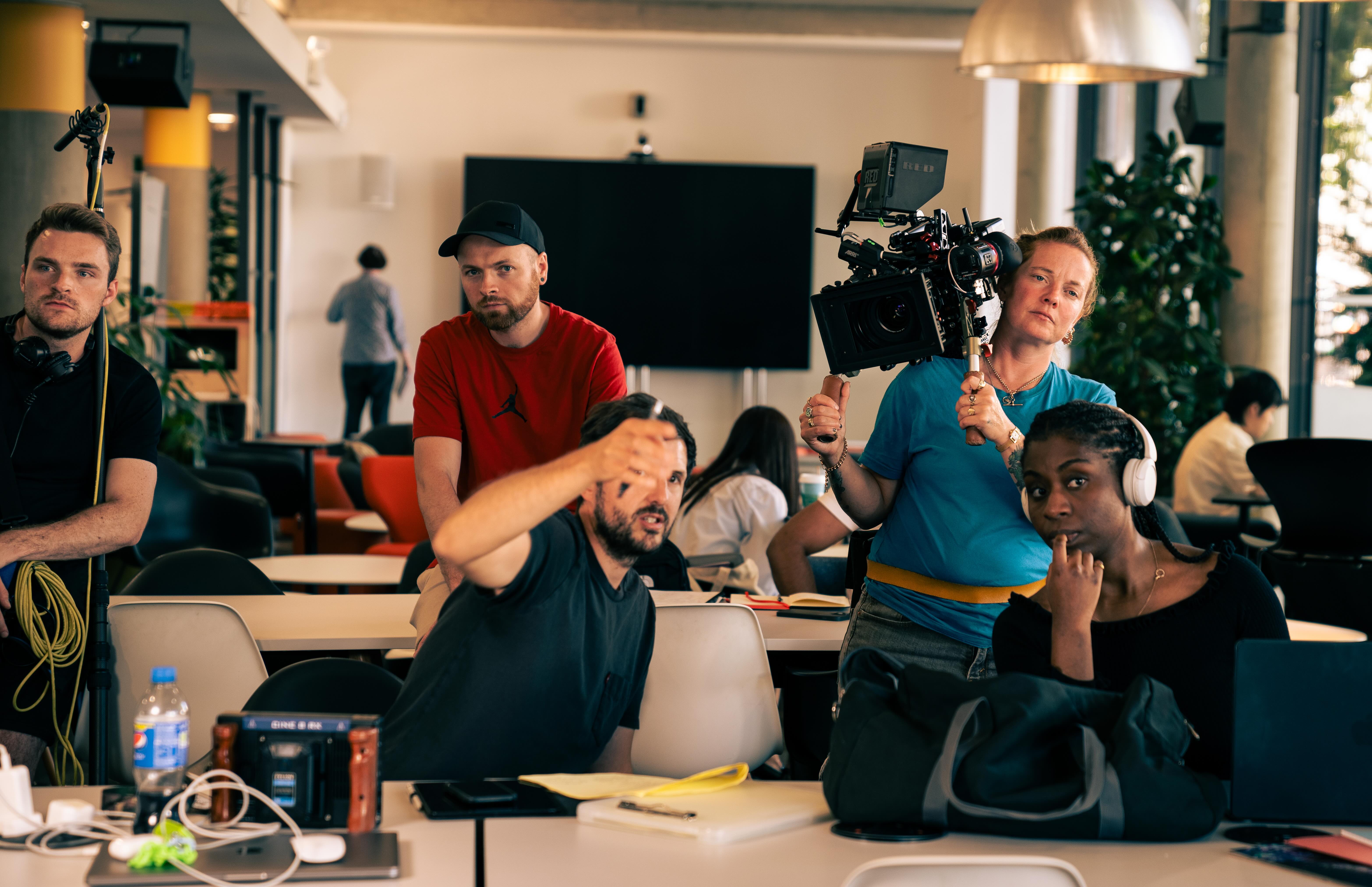
What can increase the cost of commercial production?
A few things can move budgets more than marketing teams expect, pushing an entry-tier production into a mid-tier budget band.
- Cast: A name actor, talent or influencer can inflate the figure fast, both in terms of the fee and how the shoot has to be co-ordinated around their availability windows. .
- Locations: Each extra location adds a move, a permit, setup and derig, and time. One great location is cheaper and often better than three average ones.
- Shoot days: Production days are expensive because they carry the whole crew, kit, video village, travel, catering (and more!). A tight, well-planned single shoot day is one of the best ways to protect a budget.
- Post-production: Visual effects, heavy grading, original music, and motion graphics all live in post. A film that looks simple on screen sometimes hides the most expensive post-production work.
- Broadcast delivery / Paid Ads: A commercial produced for TV, involves extra steps and a longer process than an online-only film. These include talent usage fees, music licensing, legal and regulatory compliance and adherence to broadcaster specs. The management of these rights, clearances and delivery requirements adds complexity to the production and additional costs.
What can reduce the cost of producing commercials?
Planning is key, and so many problems arise from poor preparation. The cheapest commercial is the one you make well and only have to make once. A clear brief and a tight treatment mean fewer surprises and fewer expensive changes later in post.
Maximising the output of your shoot is a big saver. One well-planned shoot day can produce a hero film plus social cutdowns and trade content, which is the thinking behind a proper campaign production. You pay once for the day and get a wealth of assets.
Be careful with the cheapest quote
If one quote comes in far below the rest, take a step back and ask yourself why.
In our experience, a low number usually means something has been left out. Maybe you're getting a small junior team instead of an entire experienced crew. Perhaps post-production is rushed. Does the quote cover both the shoot and the delivery? Is there production insurance in place?
A film that comes back wrong is the most expensive film of all, because you pay again to fix it or live with work that misses the mark and misses the opportunity. We’ve made everything from charity commercials to national Christmas ads, and the pattern holds across our work: the budget that respects the craft is the one that performs.
Every one of those choices sits somewhere in commercial production, and the number moves most at the start, not the end.
Location is one of the quieter variables. A shoot run from our Brighton studio carries a south coast crew rate rather than a central London one, and the difference over three days is not trivial.
The charity work runs on donated money and gets scrutinised harder than anything else we make, which is exactly why the cheap quote is the expensive one there.
Worth reading next: what a low quote actually costs you, and how long it takes from brief to broadcast. Time and money are the same conversation held twice.
How to get a realistic budget number for your commercial brief
You’ll get a faster, sharper quote if you bring three things:
- Who the audience is
- What the goals of the commercial are
- Where it will run
- And references / inspiration
- A rough budget range.
That last one matters. A good production partner uses your budget range to shape the most ambitious film that fits it, rather than guessing high and either pricing themselves out of the conversation or cutting the scope.
It also helps if you can share your deadline and any must-haves, such as a specific location's talent, art direction and overall feel. The more a production company understands up front, the tighter and more realistic the final quote.
Ready for a real commercial production budget?
If you have a commercial project in mind and want a straight budget figure, tell us about it. We’ll give you an honest answer with a range you can take into your next marketing budget meeting.